
Do Dogs Get Gallbladder Problems? Understanding Mucoceles, Warning Signs, and the Importance of Early Diagnosis
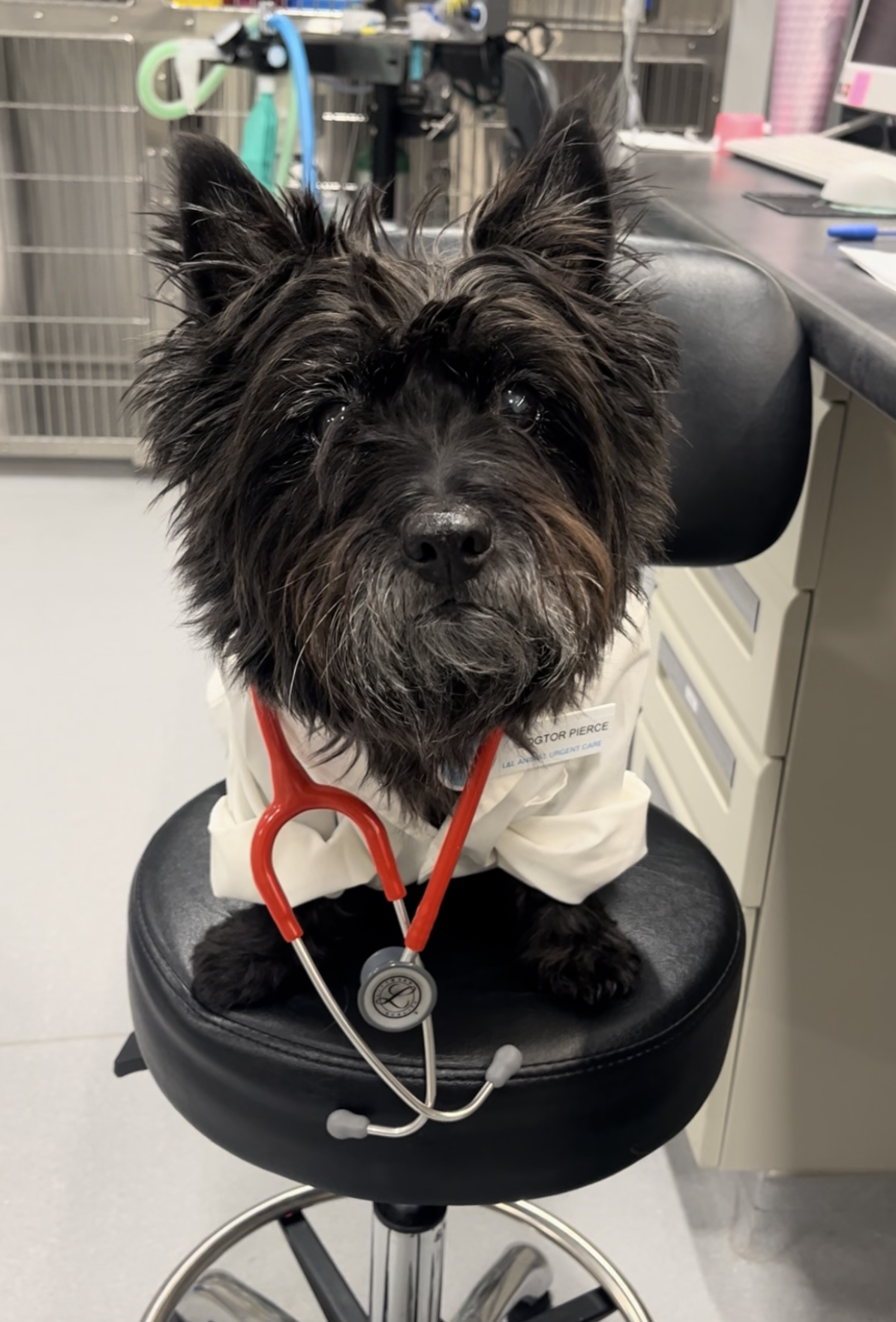
You may know him as Dogtor Pierce, but to Dr. Pierce and her family, he’s simply Oscar. Oscar is a 12-year-old neutered male Cairn Terrier who spends his days sleeping on leather couches, sunbathing in the backyard alongside his flock of 22 chickens, and logging miles on hikes through the Issaquah Alps.

As a senior dog, Oscar receives semi-annual screening to help identify early disease processes. At his most recent visit, his bloodwork and urinalysis were normal. However, his radiographs (x-rays) showed that his liver appeared enlarged compared to the previous year. Because of this change, an abdominal ultrasound was recommended. Unfortunately, the ultrasound revealed findings concerning for an emerging biliary mucocele.
A biliary mucocele occurs when thick, abnormal mucus accumulates within the gallbladder. While the exact cause is not fully understood, this material can become so dense that it obstructs the normal outflow of bile. In severe cases, this can lead to rupture of the gallbladder, which is a life-threatening emergency. For a more in-depth overview, you can read this article from the Veterinary Information Network: Biliary Mucocele is a Surgical Emergency in Dogs.
Gallbladder disease can be difficult to recognize in dogs because some, like Oscar, show no symptoms early on. As the condition progresses, however, signs may include vomiting, decreased appetite, lethargy, abdominal discomfort, diarrhea, or even yellowing of the eyes, gums, or skin (jaundice). These signs can be vague and overlap with many other conditions, which is why early diagnostics and veterinary evaluation are so important.
Humans can experience gallbladder disease as well, most commonly in the form of gallstones rather than mucoceles. While the underlying cause differs, the overall effect can be similar: blockage of bile flow and inflammation of the gallbladder. In both humans and dogs, more advanced cases may require surgical removal of the gallbladder, and fortunately, both are able to live normal, healthy lives without it.
If a mucocele progresses to the point of causing systemic illness, hospitalization and emergency surgery are required. Even with aggressive treatment, mortality rates can approach 30%, and costs may exceed $30,000 due to complications and prolonged hospitalization. In contrast, when identified early in stable patients, planned (nonemergency) gallbladder removal carries a significantly lower risk, with mortality rates closer to 1–2%.
Oscar was initially managed medically with a diet change and two medications aimed at slowing progression of the mucocele. A recheck ultrasound four months later showed that the condition had worsened, despite him remaining completely asymptomatic and his lab work staying normal.
Given the potential severity of this condition, Oscar was referred to an incredible, boardcertified veterinary surgeon at Timberline Veterinary Emergency and Specialty, where his gallbladder was surgically removed. Now, just four weeks post-operatively, Oscar is back to hiking and enjoying time with his chickens.
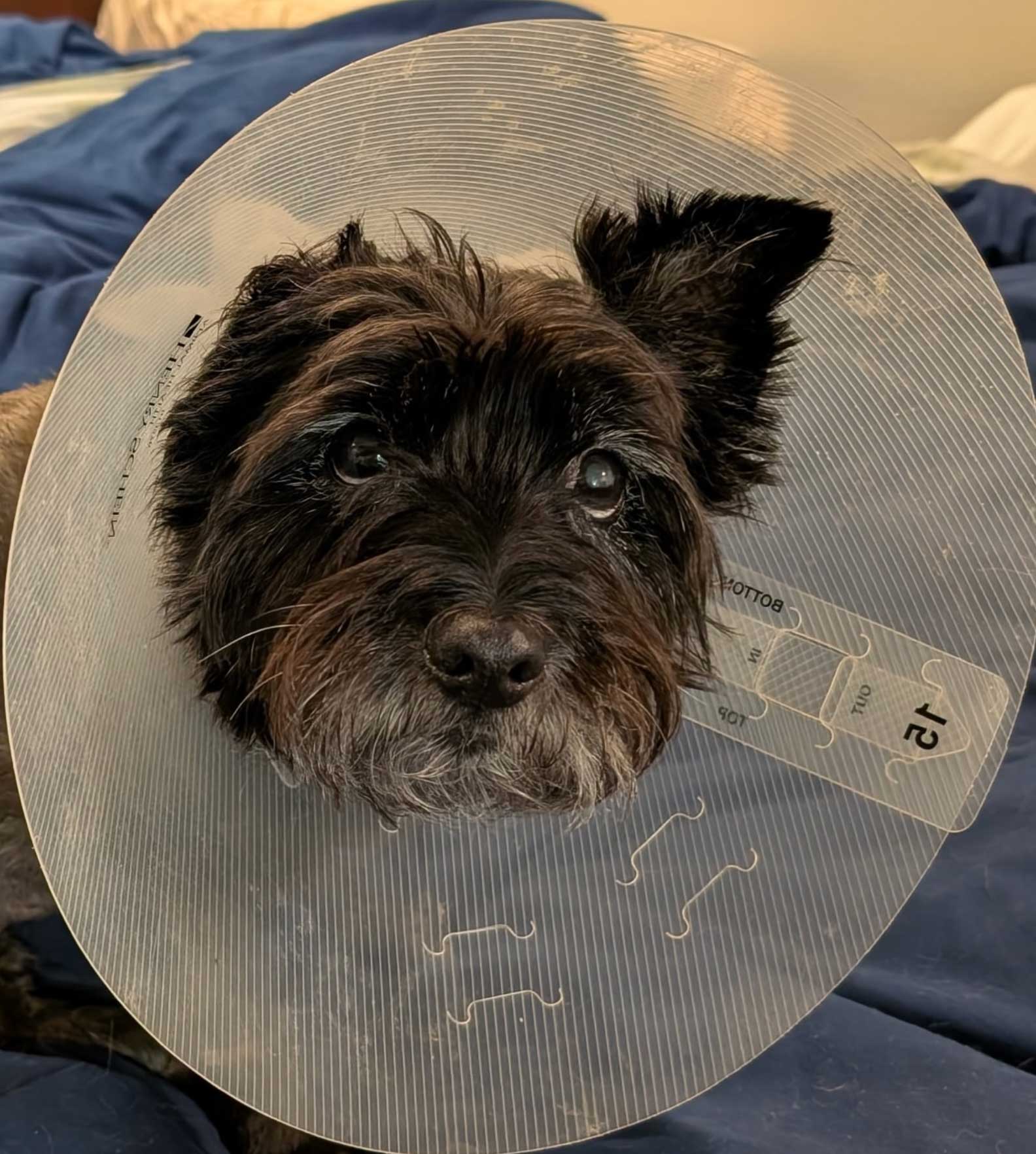
At L&L Animal Urgent Care, we work closely with your primary care veterinarian to support your pet’s health. We strongly encourage annual or semi-annual wellness screening, especially for senior pets, as early detection can make a significant difference. If your pet becomes ill, we offer in-house bloodwork to quickly assess organ function, including liver enzymes. We are also trained in performing a focused ultrasound (FAST scan), which can help identify abnormalities such as gallbladder changes. If needed, we coordinate care with trusted local specialty hospitals to ensure your pet receives advanced treatment without delay.
Oscar’s case highlights an important point: normal bloodwork does not always rule out underlying disease. Sometimes, it takes multiple diagnostic tools to uncover early changes before a pet shows clinical signs.
While not all mucoceles will progress, and some can be successfully managed with medication when caught early, others can become serious very quickly. If your pet is showing signs of illness, this is one of many conditions we are equipped to help evaluate and triage.
.png)


